A City With Nowhere to Sit
In the early 1970s a writer named William H. Whyte set up film cameras above the plazas of midtown Manhattan and let them run.
He wasn’t looking for anything dramatic. He wanted to know why some of the new public plazas, the ones developers were building in exchange for permission to put up taller buildings, were full of people at lunchtime while others, a block away, sat empty. His team, the Street Life Project, counted sitters, timed conversations, mapped where people stopped. The answer he found was almost embarrassingly simple, and he put it in his 1980 book, The Social Life of Small Urban Spaces: people tend to sit where there are places to sit.
Not where it’s beautiful. Not where there’s a fountain or a sculpture. Where there’s a ledge at the right height, a step wide enough, a bench, a chair you can move. The empty plazas had been designed to be looked at. The full ones could be sat in.
Whyte pushed one step further, and this is the part I keep coming back to. The thing people were doing on those ledges was mostly watching and talking to other people. “What attracts people most, it would appear, is other people,” he wrote. Strangers who could sit near each other, lingering with no particular purpose, were the raw material of a city’s social life. Take away the seat and you take away the lingering. Take away the lingering and nobody gets the chance to become familiar.
New York actually listened, once. The 1961 zoning rules that created those plazas had produced a lot of barren concrete. In 1975 the city amended them, and after some haggling with the Planning Commission, Whyte’s research became law: roughly one linear foot of seating for every thirty square feet of plaza. It’s one of the few times a city has written “people need somewhere to sit” into its building code.
Now walk through the New York of 2026.
Moynihan Train Hall opened on New Year’s Day 2021, the city’s grand new front door for Amtrak and the Long Island Rail Road. It is genuinely beautiful. It also opened with no public seating in its main hall. Ticketed passengers got a cordoned waiting room; everyone else got the floor, which is where hundreds of people were seen sitting during its first holiday season. In 2022 a group of elected officials had to formally ask for benches.
In the subway, the MTA has been trying out “leaning bars,” angled metal rails you can rest against but not sit on, in place of wooden benches. They first appeared at a renovated station in Brooklyn and more recently in a pilot at West 4th Street, where benches were removed to make room for them. The agency’s explanation is cost: a bar runs a few hundred dollars, a bench several thousand. Advocates for older and disabled riders called it what it is, hostile architecture.
And it’s not only transit. Armrests appear in the middle of benches so nobody can lie down. Ledges get studs. Plazas get planters where a step used to be. Each decision is small, and each has a reason someone can defend: crowd flow, maintenance, keeping people who have nowhere else to go from staying. Added together, they amount to a city quietly telling its residents: keep moving.
Here’s why I think this belongs in a conversation about loneliness, and not just urban design.
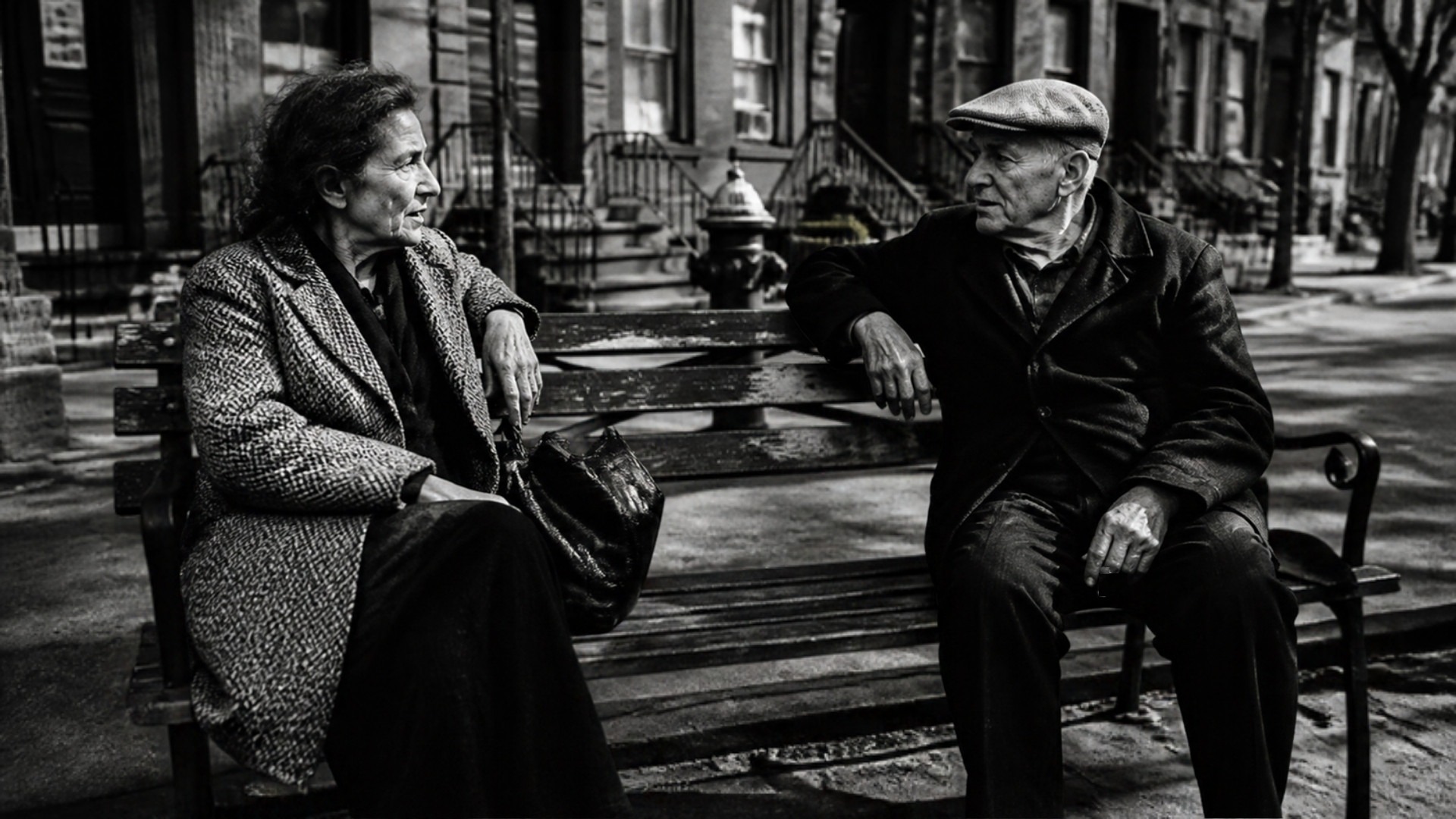
Almost every argument I make about connection comes back to the same mechanism. Familiarity is built by repetition in a shared place. The regulars at a bar, the parents on the same playground bench every afternoon, the old men on the same stoop. None of them planned to become each other’s people. They sat in the same spot often enough that it happened.
Sitting is the posture of availability. A person standing is on their way somewhere. A person sitting can be joined. Whyte’s cameras caught this fifty years ago: the conversations happened at the ledges, not in the walkways. When a city removes its seats, it isn’t just being unkind to tired people. It’s removing the one posture in which strangers can become something more.
And the people who lose the most are the ones with the least elsewhere to go. An older woman who can walk four blocks if there’s a bench at two. A kid with no yard. A man whose apartment is a single room. The bench is the cheapest piece of social infrastructure a city can build, and we keep ripping it out to solve problems that have nothing to do with the bench.
It can go the other way. In 2011 the city’s transportation department started a program called CityBench, putting benches on sidewalks in neighborhoods that had few or none, with priority near senior centers and bus stops. It aimed for a thousand. By 2015 it had passed fifteen hundred, and the installations continue; residents can still request one for their block. It’s modest and unglamorous, and it works for exactly the reason Whyte found: people sit where there are places to sit.
So, a few small things.
Notice where you can’t sit. Once you see the missing bench, you’ll see it everywhere, and you’ll understand why the block feels like a corridor instead of a neighborhood.
Use the seats that exist. The park bench, the plaza ledge, the stoop. Not with your phone. Sit the way people sat in Whyte’s films, facing the street, available to be joined.
Ask for one. A CityBench request to the city costs you ten minutes. A bench outside the senior center is a room with no walls.
Cities don’t decide whether their residents will be lonely with a speech. They decide it with a thousand small choices about where a human being is allowed to stop. For most of the last decade New York has been choosing “nowhere.” It knew better once. It can again.