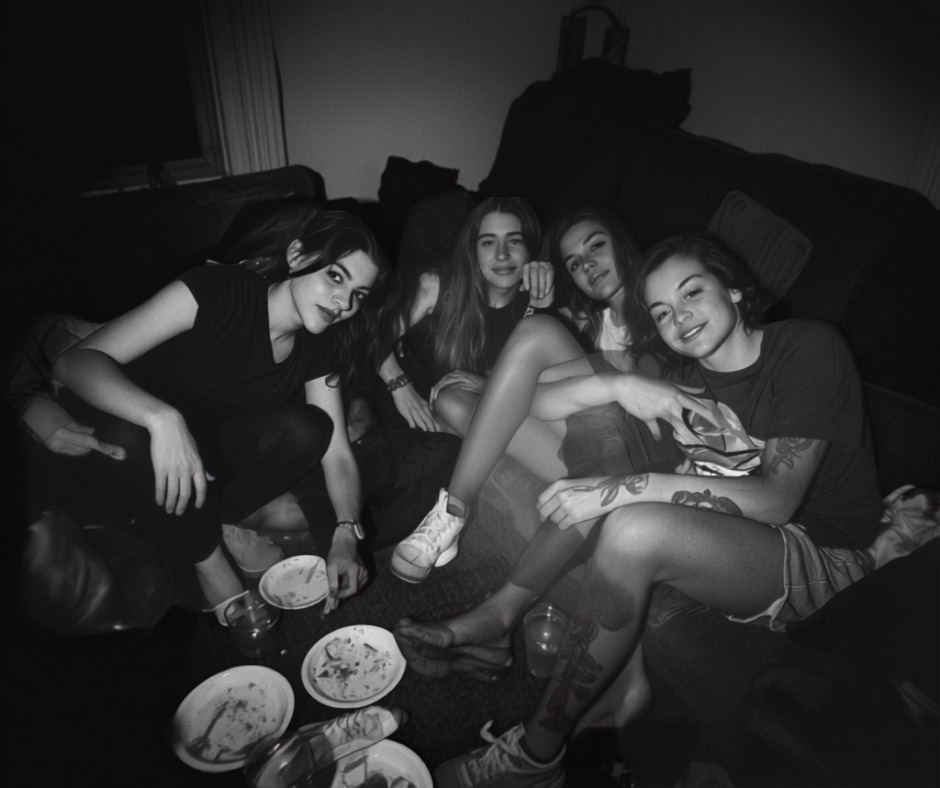
We Stopped Having People Over
Try to remember the last time someone had you over to their apartment. Not a birthday. Not a holiday. Not an occasion that required an invitation with a date on it. Just a Tuesday, and somebody said come by.
For a lot of people that memory takes a while to surface, and when it does it’s older than they expected.
This is one of the most measurable changes in how Americans live, and one of the least discussed. In Bowling Alone, Robert Putnam tracked the decline of home entertaining across the back half of the twentieth century, and the drop was among the steepest of anything he documented — steeper than club membership, steeper than voting. The Surgeon General’s 2023 advisory on loneliness picked up the same thread decades later: we are spending less time in each other’s company, and the time we do spend has moved out of private space and into scheduled, purchased, public space.
The explanation people reach for is that we’re busy. I don’t buy it. We’re not busier than a generation who worked longer hours with fewer machines. We eat out constantly, which takes longer and costs more than having four people over. Something other than time is in the way.
Here’s what I think happened. The standard went up.
Somewhere in the last fifteen years, having people over stopped being a default behavior and became a production. There is now an aesthetic for it. There’s a way the table is supposed to look. There’s a category of glassware. There’s a phrase — “hosting” — that used to describe a thing you did and now describes a skill you either have or don’t, complete with people who are known for being good at it and a whole media economy demonstrating how. The bar moved from *there are chips* to *there is a tablescape.*
When the floor of acceptability rises, frequency collapses. This is true of everything. It’s true of exercise, it’s true of writing, and it is emphatically true of hospitality. A person who believes having friends over requires four hours of preparation will do it twice a year. A person who believes it requires unlocking the door will do it twice a month. Same person. Same apartment. Different threshold.
The second thing that happened is architectural, and in cities it’s the bigger factor. The rooms got smaller and the living rooms got converted. In New York the pressure of rent turned the shared social space of the apartment into someone’s bedroom — the flex wall is a social policy decision that nobody voted on. You cannot invite six people into a home that no longer has a room for six people. So the gathering migrates to a bar, where it costs money, runs on a clock, and ends when the check comes.
That migration sounds neutral. It isn’t. A restaurant is a bounded container with a fixed exit, and the exit is what matters. Dinner ends because the table turns. Drinks end because the tab closes. Nothing that happens in a commercial venue is allowed to run long, and the parts of friendship that actually deepen a relationship almost always happen in the part that runs long — the last hour, after the plan is over, when nobody has anywhere to be. The living room’s structural advantage over the restaurant isn’t the money. It’s that a living room has no closing time.
It also has no performance. Being in someone’s home is the only ordinary way adults still see how another adult actually lives: the mug situation, the books, the thing on the fridge, the dog’s opinion of you. That’s a form of disclosure you cannot purchase and cannot get across a restaurant table, because the restaurant is neutral ground and neutral ground reveals nothing about anyone.
Priya Parker’s argument in The Art of Gathering is that most gatherings fail for lack of purpose, not lack of logistics — and that hosts obsess over exactly the wrong variable. The food is not the thing. The room is not the thing. Who is in it, and why, is the thing. We have spent a decade getting better at the variable that doesn’t matter and worse at the one that does.
So the correction is unglamorous. Lower the standard, out loud, in the invitation. “Come over, I’m making too much pasta, the apartment is a disaster” does more work than any amount of preparation, because it tells the other person what’s expected of them when it’s their turn. Half of why people don’t host is that they can’t imagine reciprocating at the level they were hosted. A low bar is contagious in the same way a high one is.
Then repeat it. The same night, the same handful of people, often enough that nobody has to be persuaded. A recurring, mediocre Tuesday will produce more actual friendship than a perfect dinner party once a year, and it isn’t close. Frequency beats production value every single time, and the whole reason we stopped is that we forgot that.
The apartment doesn’t have to be nice. It has to be open.