Alone Is Not the Same as Lonely
I spend most of my working life arguing that we are too alone. So let me say something that might sound like it cuts against all of it: being alone is not the problem.
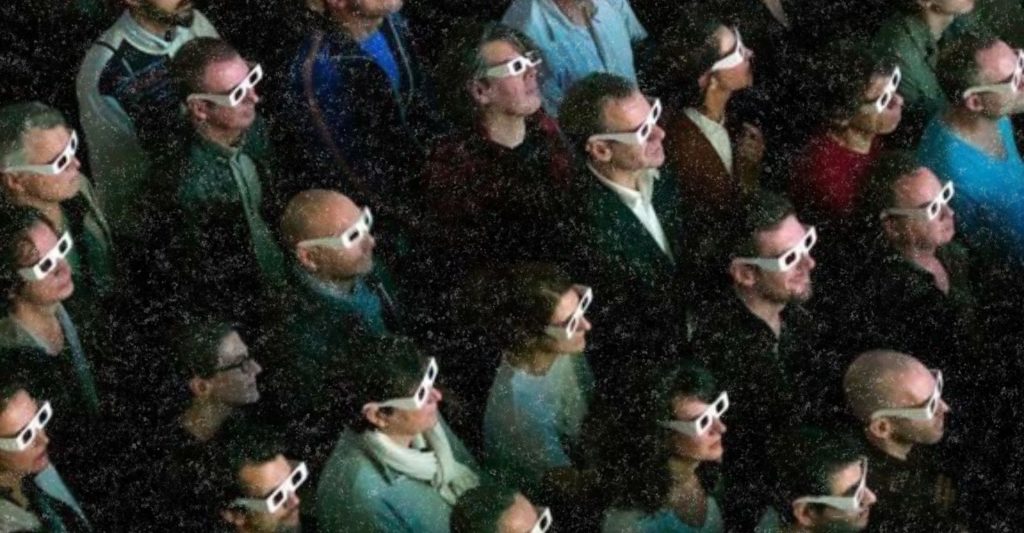
We have started using “alone” and “lonely” as if they were the same word. They aren’t. You can eat dinner by yourself on a Tuesday, walk home through the city with no one to talk to, spend a whole Sunday in your apartment, and feel completely fine. And you can sit at a table of ten people you have known for years and feel like you are behind glass. Anyone who has been lonely in a marriage, or at a party thrown in their honor, knows the difference in their body.
The researchers who study this got there decades ago. In 1981, the psychologists Daniel Perlman and Letitia Anne Peplau described loneliness as what happens when your social relationships fall short of what you need, in number or in quality. It’s a gap, not a headcount. Loneliness is the distance between the connection you want and the connection you actually have. Close that gap and you are not lonely, even if you spend most of your hours on your own. Widen it and no amount of company fixes it.
That matters, because the connection conversation, mine included, can slide into a prescription that doesn’t follow from the diagnosis. More plans. More events. More group chats. Fill the calendar and the loneliness will go away. For some people, that’s exactly right. For a lot of others it just produces a busier version of the same ache, with less time to notice it.
Here’s the part that worries me more. We are losing the ability to be alone at all.
In 2014, a team led by the psychologist Timothy Wilson published a set of studies in *Science* that should be more famous than it is. They put people in a plain room with nothing to do for somewhere between six and fifteen minutes and asked them to entertain themselves with their own thoughts. Most people found it unpleasant. In one version, participants could give themselves a mild electric shock during the quiet period, a shock many of them had said beforehand they would pay money to avoid. Twelve of eighteen men and six of twenty-four women pressed the button anyway. Minutes of their own company was worse than pain.
That isn’t a finding about technology, although technology makes it easier to never find out. It’s a finding about a muscle most of us have stopped using. When you can’t be alone, you don’t actually choose company. You flee into it. And people who are fleeing into a room behave differently from people who walked into it on purpose. They need the room to do something for them. They grab. They perform. They leave the moment it stops distracting them.
Solitude, done right, does something company can’t. In 2018, Thuy-vy Nguyen, Richard Ryan and Edward Deci ran experiments where people sat alone for fifteen minutes without their phones. Their high-energy emotions came down, the anxious ones and the excited ones alike, and calmer states went up. The researchers called it a deactivation effect. Being alone lets the system settle. It’s not a void, it’s a reset.
So I’ve started thinking about solitude and connection as two halves of the same capacity rather than opposites. The person who can sit alone with their own thoughts is the person who can actually be present at the table, because they aren’t there to escape themselves. And the person with a few relationships that genuinely hold them can afford to be alone, because the solitude has somewhere to return to. Take away either half and the other one gets worse.
The wellness industry has managed to sell both halves badly. It sells solitude as a product, the spa day, the retreat, the “me-time” you schedule and pay for, as if being alone were a luxury service instead of an ordinary skill. And it sells connection as optimization: network more, join more, attend more. Neither one touches the actual problem, which is fit. Are the people in your life the ones you need, and do you get enough of them, in the way you need them?
That’s a harder question than “are you busy enough.” It asks you to be honest about quality, not quantity. It might mean fewer plans, not more. It might mean one friend you can call at eleven at night is worth more than a full weekend of acquaintances. It might mean the lonely feeling you get on a Sunday evening isn’t telling you to go out. It might be telling you who you wish were there.
So here’s what I’d offer instead of another calendar. Practice being alone on purpose: a walk, a meal, fifteen minutes with nothing in your hands. And when you do reach for people, reach for the ones who close the gap. Not company for its own sake. The right people, often enough, in a room you chose to walk into.