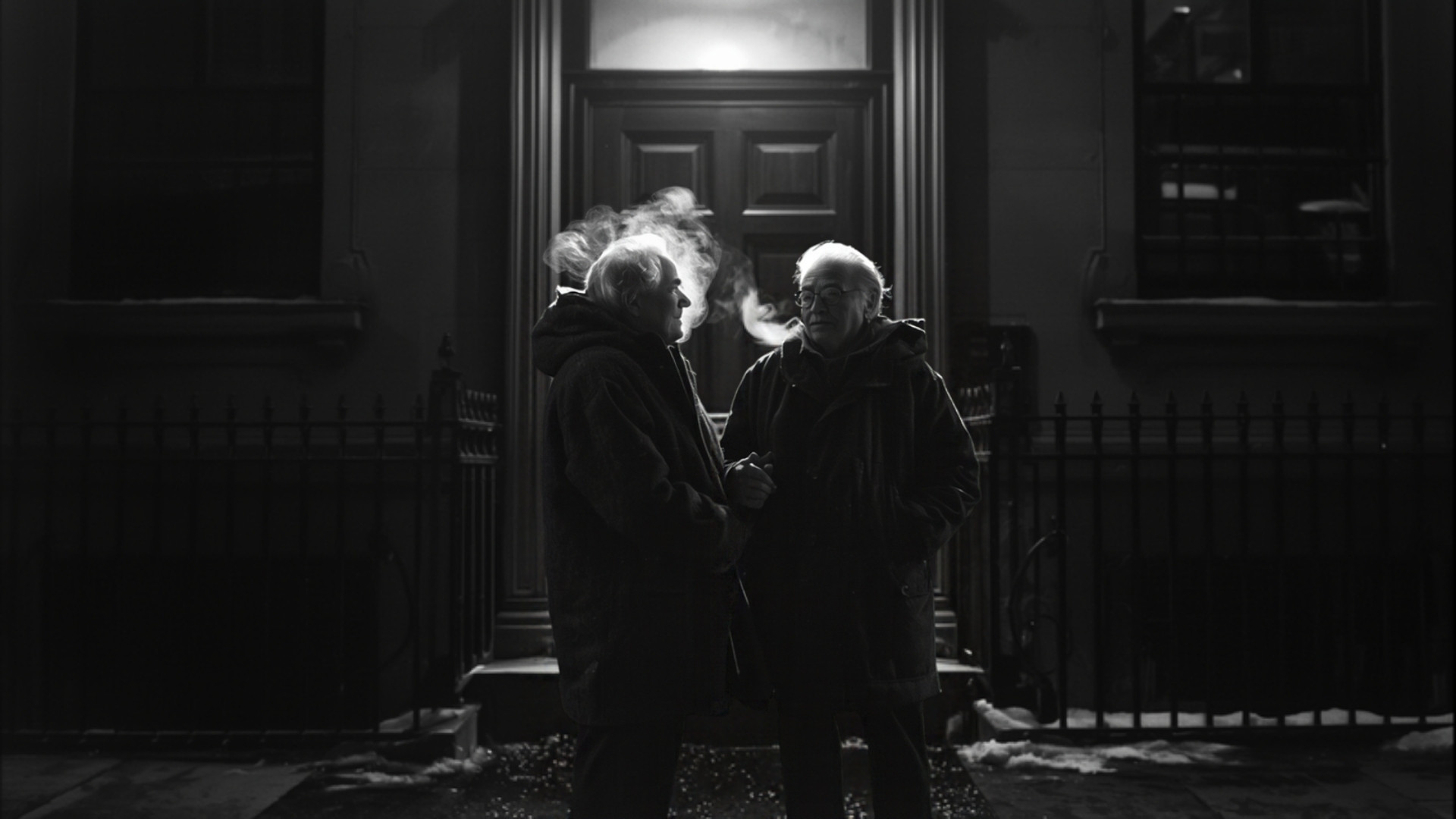
The Season the Street Goes Inside
Yesterday the clocks fell back. If you live in New York, the sun will set before five this afternoon, and by December it will be gone around 4:30. For the next four months, most of us will leave work in the dark and go straight home.
We usually talk about this as a mood problem. Less light, lower energy, the winter blues. That’s real. But there’s a second thing that happens in November, and it gets far less attention: the street goes inside.
From May to October, a lot of our social life happens without anyone planning it. People sit on stoops. Kids stay out until someone calls them in. You run into a neighbor at the park, linger outside the bodega, take the long way home because the evening is nice. None of that is a plan. It’s the ambient layer of social life, and warm weather supplies it for free.
Winter switches it off. What’s left is whatever happens indoors, on purpose, on a schedule. And that is exactly the layer we’ve spent fifty years dismantling: the church supper, the lodge meeting, the bowling league, the union hall on Thursday nights. For our grandparents, winter was when those rooms were fullest. For most of us now, winter is when we find out how few of them we have.
The clearest evidence I know for how much this matters comes from the opposite season.
In July 1995, a heat wave killed 739 people in Chicago in about a week. The sociologist Eric Klinenberg spent years reconstructing who died and why, and published it as Heat Wave: A Social Autopsy of Disaster. Many of the dead were older people living alone, found days later behind locked doors and sealed windows. Some had no one to claim their bodies.
The finding that stays with me is a comparison of two neighborhoods. North Lawndale and Little Village sit right next to each other on Chicago’s West Side. Both were poor. Both had many older residents living alone. They had the same weather. Yet North Lawndale had one of the highest death rates in the city, and Little Village one of the lowest.
The difference, Klinenberg argued, was the street. Little Village had busy sidewalks, open shops, churches, people who knew which neighbor hadn’t been seen that day. North Lawndale had lost much of its commerce and many of its residents; its blocks were emptier, and older people had good reason to stay inside. In one neighborhood, someone knocked. In the other, nobody did.
The lesson he drew is one I think about constantly: isolation isn’t mainly a trait of individuals. It’s a property of places. The same person, with the same temperament, can be far more or far less alone depending on what surrounds them.
Winter is the slow, undramatic version of that heat wave. It rarely kills anyone outright. But every year it runs the same test: when the outdoor, accidental layer of social life shuts off, what’s left? For a lot of people the honest answer is a couch, a screen and a group chat.
It doesn’t have to be bleak. The psychologist Kari Leibowitz spent a year studying people in Tromsø, Norway, far above the Arctic Circle, where the sun doesn’t rise for weeks in the middle of winter. What she found was that many people there didn’t experience winter as something to endure. They treated it as a season with its own pleasures: candles, cafés, ski trips, evenings in each other’s kitchens. A culture that expects to spend winter together builds the habits and the rooms to do it.
We don’t have that culture by default. So we have to build the winter version on purpose, and early, before the evenings close in completely.
A few things that work.
Book a standing indoor thing now. A weekly game night, a class, a choir, a pickup league in a school gym, a volunteer shift. The point isn’t the activity. It’s having somewhere to be on a cold Tuesday that doesn’t require a fresh decision.
Host smaller and more often. A pot of soup on Sunday beats one big party in December. Winter rewards repetition, not occasions.
Check the doors near you. Klinenberg’s lesson cuts both ways. If you’re the one with energy this winter, you can be the reason someone on your floor isn’t invisible. Learn the name of the older person down the hall. Notice when the mail piles up.
Count your rooms. Before Thanksgiving, ask yourself honestly: where will I be, with other people, every week between now and March? If the answer is “nowhere in particular,” that’s not a character flaw. It’s a missing piece of infrastructure, and you’re allowed to build it.
The clocks fell back yesterday. Spring is a long way off. Make sure there’s a room waiting for you before it gets dark at 4:30.