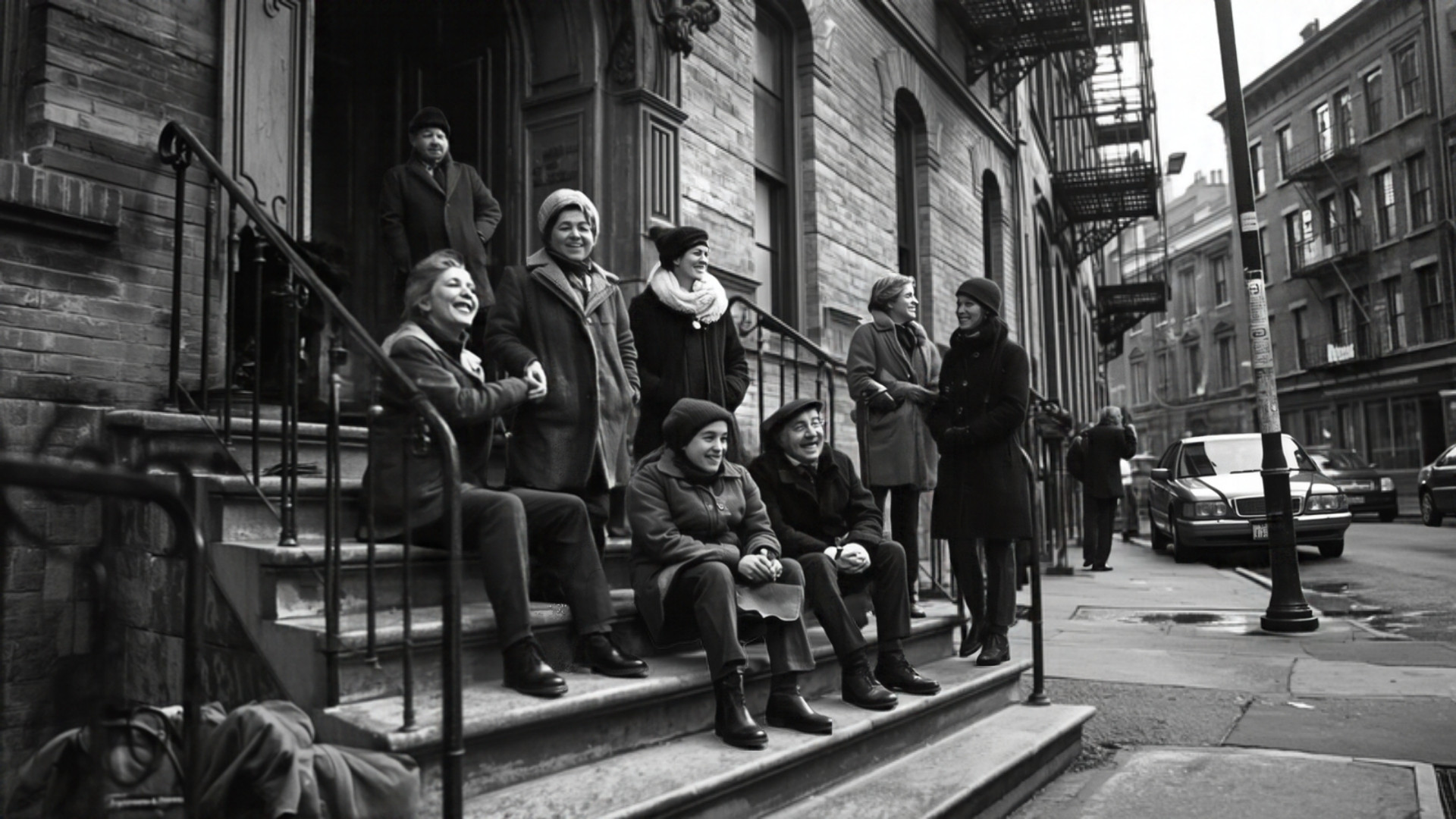
It Was Never the Sermon
In 2021 Gallup reported something it had never reported before: fewer than half of American adults belonged to a church, synagogue or mosque. The number was 47 percent. At the end of the 1990s it had been 70. Pew’s latest count puts the religiously unaffiliated at roughly three in ten adults, and among people under thirty it is higher still.
You can read those numbers as a story about belief, and most people do. Fewer people believe, so fewer people go. But that isn’t the part that matters for the argument I keep making about loneliness. The thing we lost when the pews emptied was not mainly a theology. It was the single largest piece of social infrastructure in the country, and we have not replaced it with anything.
Here is the study I keep coming back to. In 2010 the sociologists Chaeyoon Lim and Robert Putnam published a paper in the American Sociological Review asking a plain question: why do religious people report being happier? They had a national survey that interviewed the same people a year apart. The answer wasn’t belief. Private prayer, the strength of someone’s faith, how certain they were about God: none of it moved life satisfaction much on its own. What moved it was friends in the congregation. People who attended regularly and had several close friends in the same room scored far higher than everyone else. People who attended but had no friends there looked about like people who never went at all.
Putnam and David Campbell found the same thing across every civic measure they could think of in American Grace. Religious Americans give more, volunteer more, show up to more things. And the whole effect runs through what they called church friends. A believer with no congregation looks like a secular person. A secular person who somehow has church friends looks like a believer. The room is doing the work, not the creed.
So look at what the room actually was.
It met every week, same hour, same place, and you did not have to decide each time whether to go. Deciding is the tax that kills attendance at everything.
It mixed ages by default. For many of us it was the only place we ever sat next to an eighty-year-old who wasn’t a relative.
It gave people jobs. Usher, choir, the coffee table, the youth group, the one who visits the sick. A role is how a room notices your absence, and being missed is where belonging starts.
It had an obligation attached. If someone’s husband died, a casserole showed up, and so did people, for weeks. Not because they were unusually kind, but because the institution expected it and had a system for it.
And it was free, or close to it, and nobody got turned away for not being interesting.
I’m not making a case about God here, and this is not an argument for going back. Plenty of people left those rooms for reasons that were right for them, and I’m not going to tell anyone their reasons were wrong. The point is narrower and, I think, harder: we walked out of the one institution that ran weekly, mixed-age, role-giving, obligation-carrying rooms for free, and we told ourselves the loss was spiritual. The loss was social. And it was enormous, because nothing else in American life operated at that scale.
What replaced it? A gym membership that puts you in a room of strangers in headphones. A brunch that happens when the group chat finally agrees on a date. A podcast that feels like company and isn’t. Each is pleasant. None of them has a roster, a rhythm, a role, or a casserole. None of them notices when you stop coming.
People have tried to build the secular version on purpose. In 2013 two British comedians started Sunday Assembly, a congregation with no God: songs, a talk, a moment of reflection, coffee after. It spread to dozens of cities within a couple of years. Many of those chapters have since gone quiet. That is instructive. You can copy the form in a weekend. You cannot copy the obligation, the roles, and the decades of showing up, and those were the parts that worked.
So what do you do with this if you’re not going back?
First, stop grading your social life by whether you have enough friends and start grading it by whether you have a room: a weekly, fixed, same-faces place you don’t have to decide about. If you don’t have one, that is the deficit, not your personality.
Second, pick a room that gives you a job. Volunteer crews, choirs, rec leagues, community gardens, the recurring thing at the library. Roles beat vibes. Avoid anything you merely attend.
Third, carry the obligation yourself, since nobody will hand it to you. When someone in your room goes missing for two weeks, be the person who calls. That one habit was most of what the congregation knew how to do.
The empty pews aren’t a crisis of faith. They’re an infrastructure gap, and infrastructure can be rebuilt, on purpose, by people who understand what the old version was actually for. It was never the sermon. It was the people who noticed you were gone.